Culture Eats Strategy

I’ve related this story before, but it seems relevant.
In 1995, as the Internet was exploding, Microsoft was abuzz internally with efforts to build Internet products. Every product team was thinking about the Internet and what they should do. There were multiple teams building authoring tools, servers, and browsers. It was a little chaotic, but not all bad – there was a lot of good energy engaging on internet issues.
But when you have 27 product teams all running in slightly different directions, you don’t really have a strategy. And when you have 7 different leaders inside the company saying “My team is responsible for responding”, no one is responsible. Your products will seem incoherent and confusing to the outside world, your org will flail and finger-point. And leadership at Microsoft knew that, and eventually corralled all the teams into more focused efforts.
The effort to build a great browser was pulled together under Brad Silverberg, who was a great choice. Brad knew how to lead consumer systems teams, as evidenced by the great success of Windows 95. He was (and still is) well respected inside and outside the company. He was very attuned to the end-user experience, and he drove us all to create a browser that people would want to use, that people would demand to use, and that would be the best browser on the market. He made us think about speed, simplicity, ease of use, coolness, all the things that consumers would want in a browser.
Organizing everything under one competent leader was critical. It prevented needless internal flailing and allowed the company to communicate clearly to customers about products and intentions. “All our wood behind one arrow” is usually a good plan if you have a competent team leading with a clear goal.
Brad focused us all on individual adoption. We were laser-focused on building a great browser that people would want to download and use. The world was awash with browsers in 1995/1996: every ISP provided one, you could download dozens, and every PC manufacturer preloaded a handful on their machines. And Netscape had a dominant share. Microsoft had its own distribution and brand advantages, so we knew we could get lots of trial, but we had to offer a great product for people to stick with it. We fought for each consumer and each individual developer. Even though Microsoft had a strong and growing enterprise business, we focused first and foremost on individual adoption. Enterprises could force browsers on desktops, but if you don’t win each individual user, users will drag in other solutions.
Now it is a generation later, and Microsoft is facing a new challenge. And despite Microsoft’s early focus on AI, it is not going well — Copilot is an afterthought for most users:
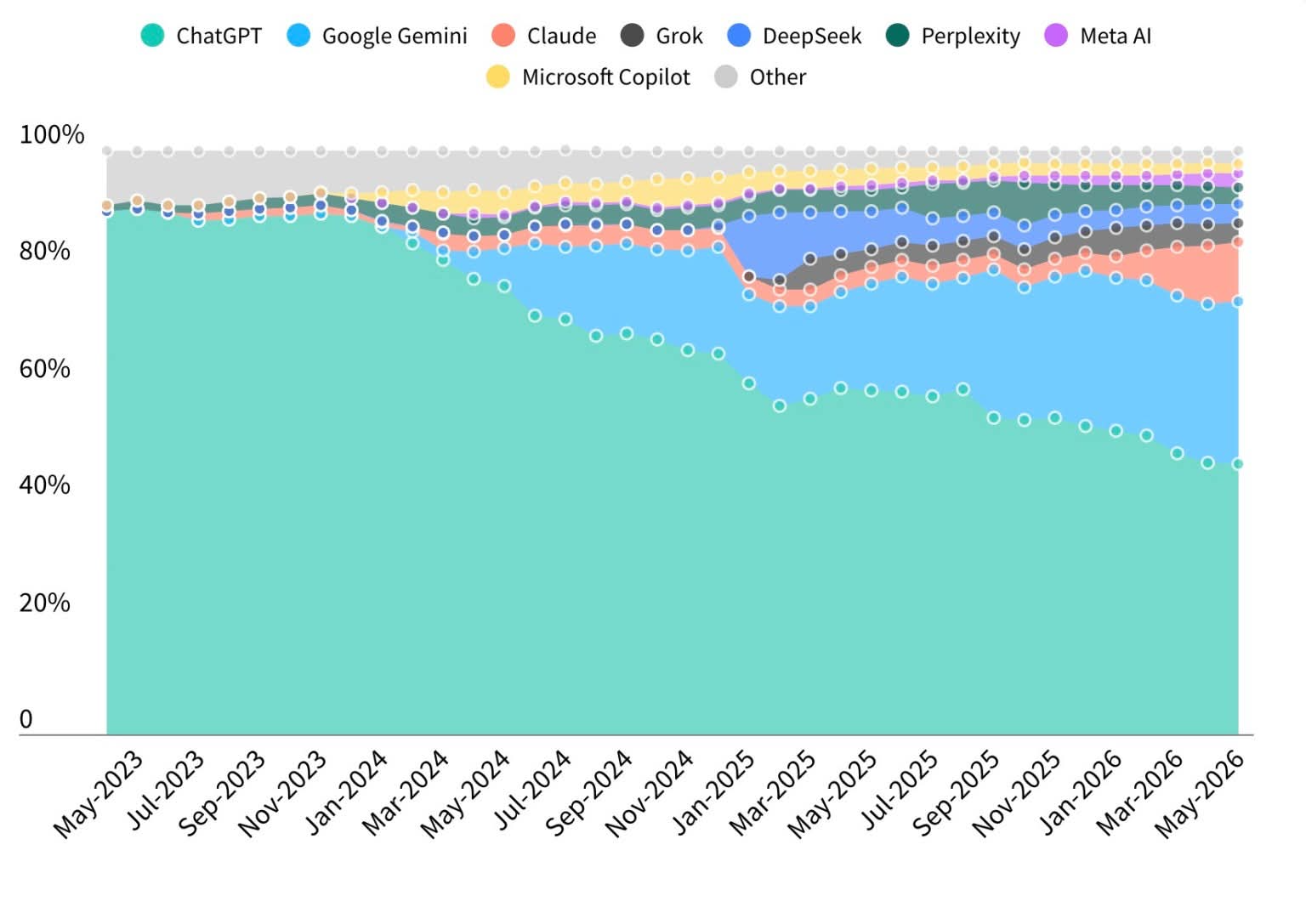
Microsoft had full access to the same technology as ChatGPT and couldn’t turn Copilot into a decent AI chatbot to save their lives.
It’s a testament to how culture eats strategy for breakfast. Building good consumer products is simply not in Microsoft’s DNA, even if you spoonfeed them the ingredients.
I’m not sure what is going on inside the company, but it sure seems like they need a single-minded leader and organization, with demonstrated user adoption success, focused wholly on Copilot adoption.
Shorts
The Diff on why chaos is ok and maybe even good inside software companies right now:
The last year has been the biggest shift in both the potential output of software engineers and the variance in that output; there are people who were bottlenecked by typing, or autocompleting, and who can now produce code much closer to how fast they can think. And there are people who are wasting six figures on unmaintainable messes, putting their API keys in public GitHub repos, etc. So, any company that's in the business of shipping software and that doesn't feel incredibly chaotic right now is underreacting; the world they're in just got more chaotic, and somebody out there is adapting.
Better immigration can help fix the debt:
The main point I would make on that front is that there’s a lot of discourse about what the actual budgetary impact of immigration is. But we ought to be thinking more about what the budgetary impact of immigration could be if we took budget concerns seriously, rather than just using them as bludgeons in a culture war.
Allowing people to migrate to the United States for work has large aggregate economic benefits, and we can use tax policy to decide exactly where those benefits land.
The United States continues to be a relatively sparsely populated country with abundant natural resources and the privilege of being a place where huge numbers of people would like to live. We should be selective about the people we invite to be permanent residents, but when you can recruit people of above-average ability and decent values to come to your country, it’s a good idea to do that.
It is stupid that we have allowed immigration to become a negative and dividing issue. It should be our superpower.