Home devices; Inspiration from Anders
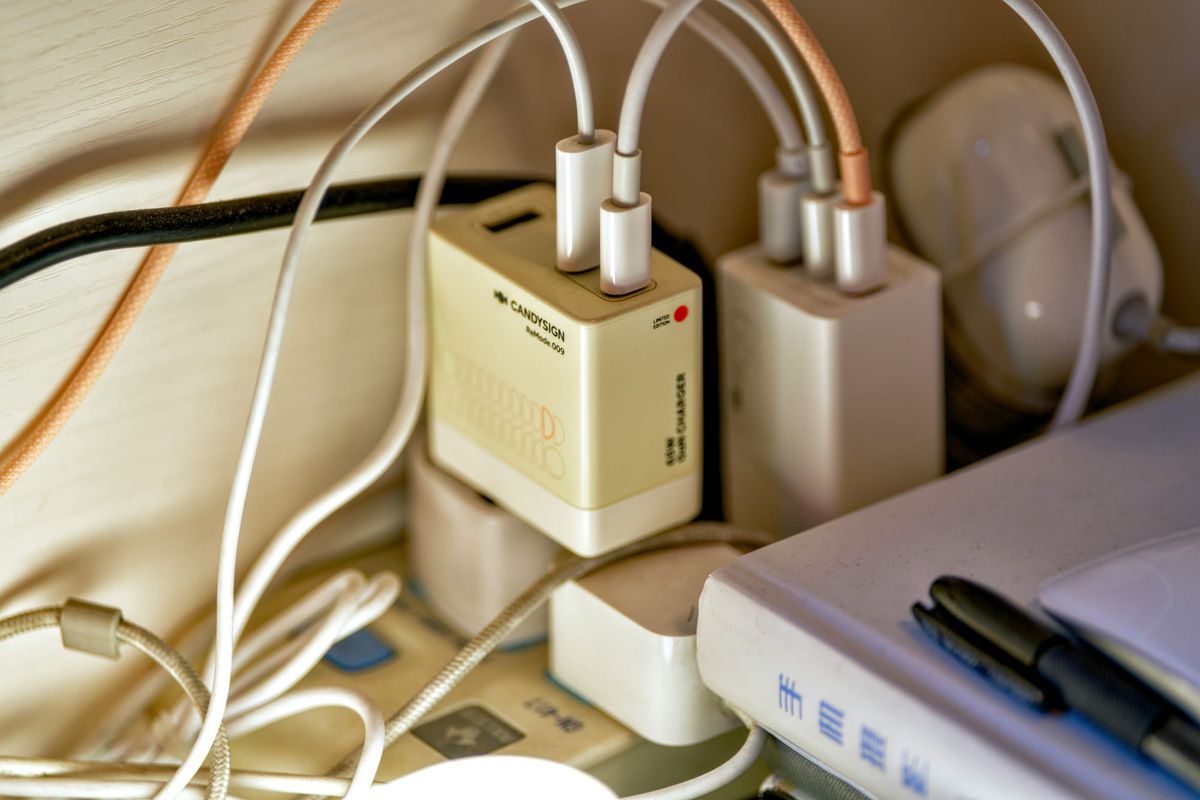
I was in a high-end retail store recently, and there, next to the checkout counter, I saw a floor outlet with an absolute mess of plugs, chargers, Ethernet connectors, and the like. It was shocking to see it in an otherwise thoughtfully designed and expensive retail space.
We all have something like this in our homes, or several somethings like it. We have these messes at our desks, behind or next to our TVs, on the kitchen counter.
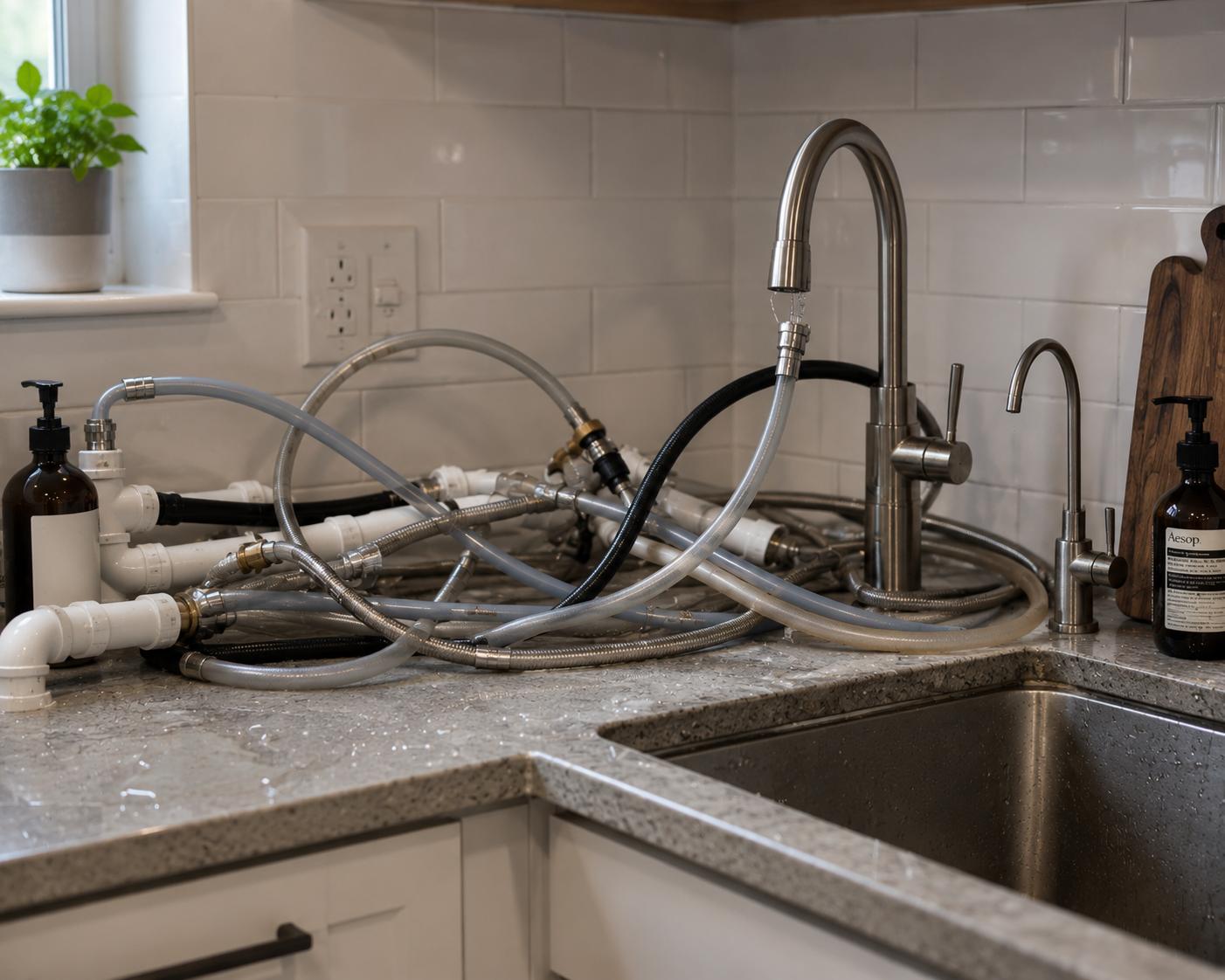
Imagine if our kitchen plumbing looked like this. But it doesn’t. We have beautifully designed fixtures available from a wealth of retail outlets. Connections for icemakers, dishwashers, and filters are thoughtfully hidden under the counter in cabinets designed for the purpose. Much of the difference is market maturity — we’ve had water service in houses for over 100 years, and water piping hasn’t had to change much over the years. I do remember, as a kid, when dishwashers were new, and people rolled them out and attached them to the kitchen sink with a hose connection. Those days have passed.
But we are still in the early days of digital devices, and we have been continually changing the cable and connector requirements. And the design and architecture professions have not gotten out in front of device needs. There are multiple problems. Individual elements are ugly — cables, power strips, transformers, connectors. And then the system of devices is a mess — cable routing and storage is a mess. Transformers and DC power supplies are a mess. Device interconnect is a mess.
There has been little architectural or design attention paid to our digital lives in our homes and in home products. I’m looking forward to the day when digital products are integrated as thoughtfully as plumbing products.
Home WiFi
We were having some issues with our home WiFi. It is easy to ask Claude, Gemini, or whatever what to do about this. But I love that Claude gives me the ability to write an app for a very small target market — myself. I wanted to map out the Wi-Fi signal strength in my house. There are pay versions of such apps, but where is the fun in that? So I wrote my own using Claude Code.
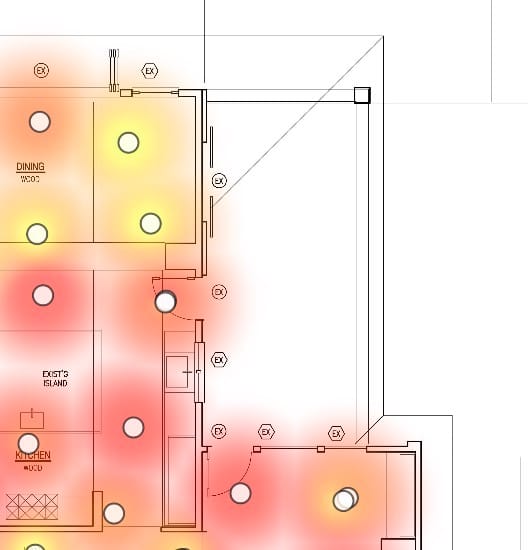
Could I have written this app without AI assistance? Sure. It would have taken me a lot longer. Claude chose Swift Playground as the best runtime platform — I have only a passing familiarity with Swift, so it would have taken me some time to get up to speed. In the AI age, we can let the tools target Swift, Python, Ruby, JavaScript, or whatever platform is best; this is a great step forward.
I’ve put my pencil down on this app for now, but after talking with friends, I have a bunch of ideas about how to push ahead — iOS hosting, a dedicated signal-detection dongle (to get around iOS platform limits), and an ARKit implementation.
Anders Hejlsberg
It is refreshing to watch Anders Hejlsberg talk. Anders is exactly the kind of person who made my tenure in the tech industry so rewarding — he is a technology enthusiast, he cares about users and the uses of technology, he is wise, and he shares his knowledge without reservation.
In this latest interview with him, Anders talks about a couple of subjects which really struck me. First, the discussion about “Why was TypeScript originally written in TypeScript/JavaScript?” Anders is eloquent about the importance of self-hosting — there is nothing like using your product every day as a critical part of your work process to force you to make the product great.
And Anders makes the point that there is huge value in living full-time in the ecosystem you are delivering your product into — you learn and appreciate the resources, the community, and the challenges in a way you never will if you are lobbing in products from the outside.
Anders also spoke about his own use of LLMs. And his advice was insightful — don’t ask LLMs for answers; ask them to build a program to produce the answers you are looking for.
LLMs will give you an answer to your question, but it may have flaws, or even hallucinations, and every time you ask the LLM to answer the question, you will get a different answer. It is very difficult to create repeatable or correct work in this way.
But LLMs are good at writing code, and they can produce a program that will give you reproducible outputs, and that can be inspected to ensure they are what you want. This seems very wise.
A big hat tip to Ryan Peterman, the host, for reaching out across the generation gap to learn from Anders.