Moving Up The Stack

I spent a little time this week building a dry-humor website: a travel guide for an actual place, but with fictional activities and details. I used Claude Code and Cloudflare Pages, but the technology stack and tooling are completely irrelevant — the heart of the website is the conception, the voice, the mishmash of reality and fantasy, the execution of that voice..
In the past, it would have taken me much longer to build this site because I would have had to screw around with tooling and hosting decisions, layout, and all kinds of other crud that is largely immaterial.
Cristi looked at the website and, after a moment, said: “Oh, I get it, this is not software, this is art”. And that is a very generous characterization of what I built, but I think there is a kernel of an idea here. AI tools like Claude can take away all the technical hoo-haa we had to deal with in the past, letting humans focus on the art of a product or website. And this seems like a very good thing!
Engineers are now lamenting the obsolescence of their technical skills — detailed knowledge of CSS, React, or whatever just doesn’t command the same rewards as it used to. And this is not a tragedy at all, it is great, we can move on to the next challenges, learn new things, and create more artful products.
“Technology alone is not enough. It’s technology married with the liberal arts, married with the humanities, that yields the results that makes our hearts sing.
AI tools can free us from the minutiae of CSS, React, build tools, etc, and let us focus our energies on emotion and connection. Of course, you can use the tools to create AI slop, but you can also use them to move past some of the most mundane, repetitive, undistinctive work.
Web History
A great telling of the early days of the web — this one number is stunning:
By 1993 there were perhaps 50 websites in the entire world.
And yet by 1995, the entire industry was refocusing on the web. Even in the early days of the web, there was something primally attractive about it — it fostered connections around the world, many of which were entirely unexpected. It made connecting and linking simple and natural, where it used to be incredibly complicated and arcane.
It may not have been art, but it was certainly artful. And encouraged a lot of human creativity on top of it — including what may be the most deranged website of all time.
The web will be with us a long long time. It is interesting to think about how AI will change it – I mentioned this experiement last week: AI-generated web.
AI is eating the world
The Most Important Charts in the World. Many of these are good, some are less so, and some are just for fun. The opener:
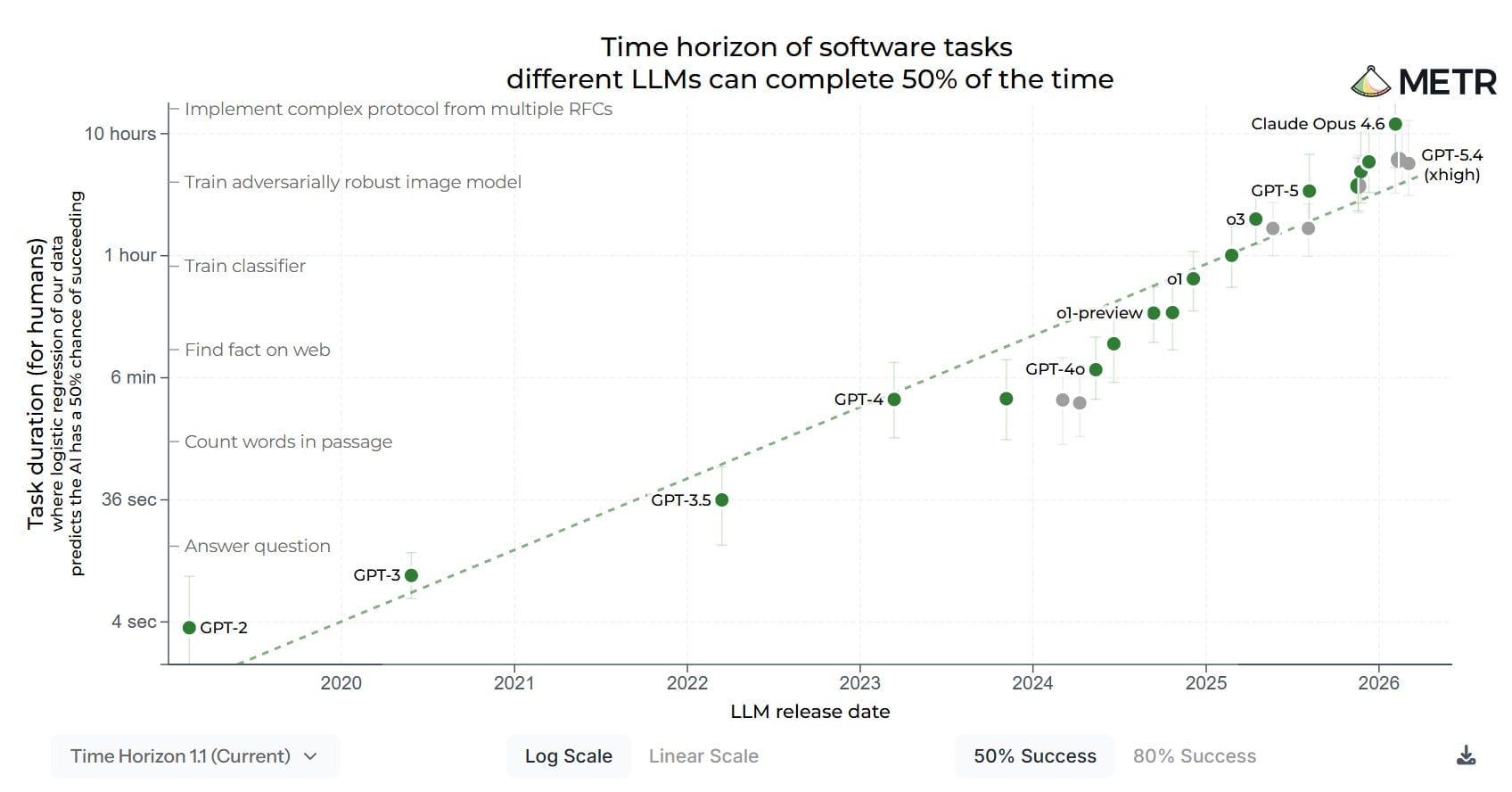
Which is a consequence of this:
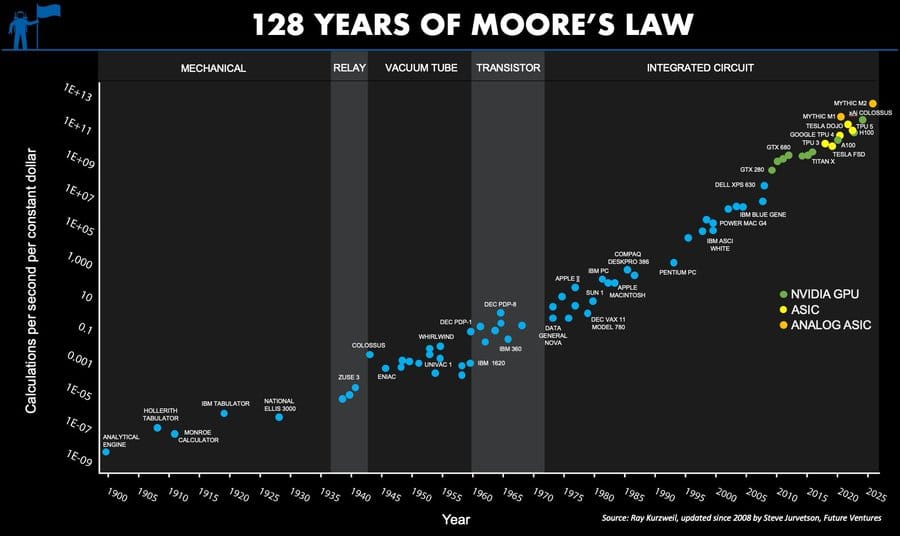
Which is all great for Intel, the GPU surge is dragging the CPU along.
600%
A lot of caterwauling about this exchange this week:
RFK Jr.: “One of the Democrats was ridiculing President Trump for his math, & she was saying it's mathematically impossible to have any drug drop by 600% cost & I said, well, if the drug was $100 & it raised the price of $600. That would be a 600% rise. If it drops from $600 to $100, that's a 600% savings.”
Trump: “That’s right.”
Many people pointed out the problems with the math and commented on how dumb Trump and RFK Jr are. And sure, the math is wrong.
But this math is irrelevant. A $500 move up or down in the price of a drug is material and important for households needing that drug. The whining about how to calculate percentages misses the importance of $500 — claiming that this is only an 83% decrease completely misses the impact. It would be more accurate to look at the $500 as a percentage of a family’s monthly income.
People come across as unfeeling and pedantic when they complain about the math.