The ball is always coming back

You don’t win points in pickleball so much as you lose them. And the dumbest way to lose them is to not be ready for the ball.
I’ll hit a beautiful shot, right to my opponent’s feet, or maybe hard down the line. And then I stand there in my follow-through, admiring the beauty of my shot, starting to tote up the points in my head. And invariably the opponent makes a solid play, returns the ball, and I am left gaping at it as it flies by me.
The first rule of pickleball is that the ball is always coming back. The opponent is always going to make a play. When you hit a shot, you must immediately get in the ready position to deal with the return — good athletic stance, knees bent, square to the ball, paddle in ready position out in front of you. Getting into that ready position also enforces so many good habits in the game — proper footwork (you can’t get into the ready position if you are flailing around with your feet), proper stance, proper racket position, controlled swings, etc.
And it is basic respect for your opponent — you believe that they are a good player and that they will make good plays on the ball. Any other attitude is just hubris. You need to extend respect to your opponent and play as if they are competent and probably better than you.
The ball is always coming back, and if you aren’t ready for that, it is your own fault, your own bad practices, your own ego getting in the way.
A favorite episode in my career was when we were building Internet Explorer and competing with Netscape. We were coming from far behind in the browser market; Netscape was dominant. And Netscape was very vocal about their dominance and very dismissive of our efforts. One point that Netscape pushed incessantly in early 1996 was Java support — Java was the future of the interactive web, Netscape was a pioneer in supporting it, only Netscape had support for it, Microsoft would never support it. Netscape crowed and crowed about Java support over and over again.
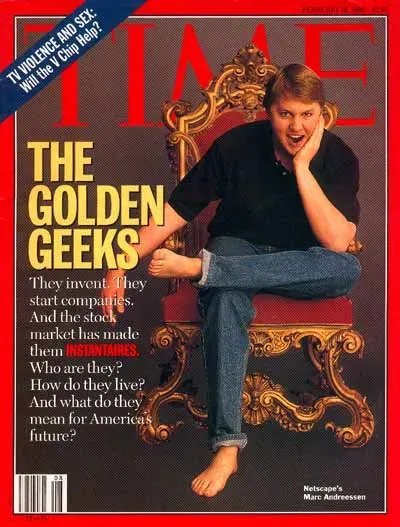
So it was a fun day when Microsoft announced Java support. And not just tepid support — we had browser support, we had the fastest Java VM with a world-class JIT, we had a great Java dev tool. Great people across the languages and OS teams had jumped in to deliver all this, and it knocked the wind out of Netscape’s sails; it completely eliminated one of their lead marketing and sales stories. That was a fun moment!
Netscape was repeatedly dismissive of Microsoft’s efforts. Most famously, calling Windows “a poorly debugged set of device drivers”. I don’t think they were prepared for us hitting the ball back.
The Iran War is stupid and wrong in so many ways. And the execution of it has been classically inept, with no respect at all for the capabilities, intelligence, and fortitude of the other side. The plan apparently was that we would drop a lot of bombs, and Iran would fold right up. I am abusing the “ball is always coming back” metaphor at this point, but it applies.
Microsoft layoffs
So Microsoft is trying to shed as many as 60,000 employees with this weasel-worded offer. That is a lot of people — the company was order-of-magnitude that size when I left in 2000; the company is trying to shed an entire large company.
Microsoft is one of the very few companies that is making money from the AI wave, and their big idea to deal with the dislocations caused by AI is to dump a bunch of people. What kind of example is this for US industry as a whole? As a leader, is it OK to just say “Gosh, this AI stuff is disruptive to our business and society, we are just going to wash our hands of the issue though”? That seems chickenshit.
And it is a complete lack of imagination. Microsoft really can’t identify any investments to make with these people? Software and computing is all solved? Is knowledge work all figured out? I always had 3-4 years of work I wanted to do when I led groups at the company, and I always had 2-3 crazy creative people who could identify decades of work to do. All of that thinking is gone?
Henry Ford was a complicated individual with some terrible character flaws, but he does deserve credit for thinking deeply about his company and its role in society, and trying to jumpstart the middle class through a dramatic wage increase that would allow his workers to afford his products and stabilize his workforce.
Microsoft can certainly afford to spend a little time and money thinking about the AI transition and leading in innovative ways to employ and support people throughout it. A giant layoff with a classically weasel-worded offer is not leadership.
An innovative idea about the impact of AI is to distribute ownership of transformative AI companies to the entire community. Several months ago I talked about placing ownership of startups into the hands of the community. So kudos to companies actually trying to make it happen:
- Anthropic PBC said it plans to put 5% of its shares into a new so-called public benefit fund that allows it to make donations that can address “the public good,” including mitigating AI’s impact on the job market.
- Elon Musk pledged to distribute a share of SpaceX to each American child, posting the move just hours after artificial intelligence competitor Anthropic PBC said it would set aside a portion of its shares for the public benefit.
Elon is a pretty bad citizen in a lot of ways, and even he is being more thoughtful than Microsoft.